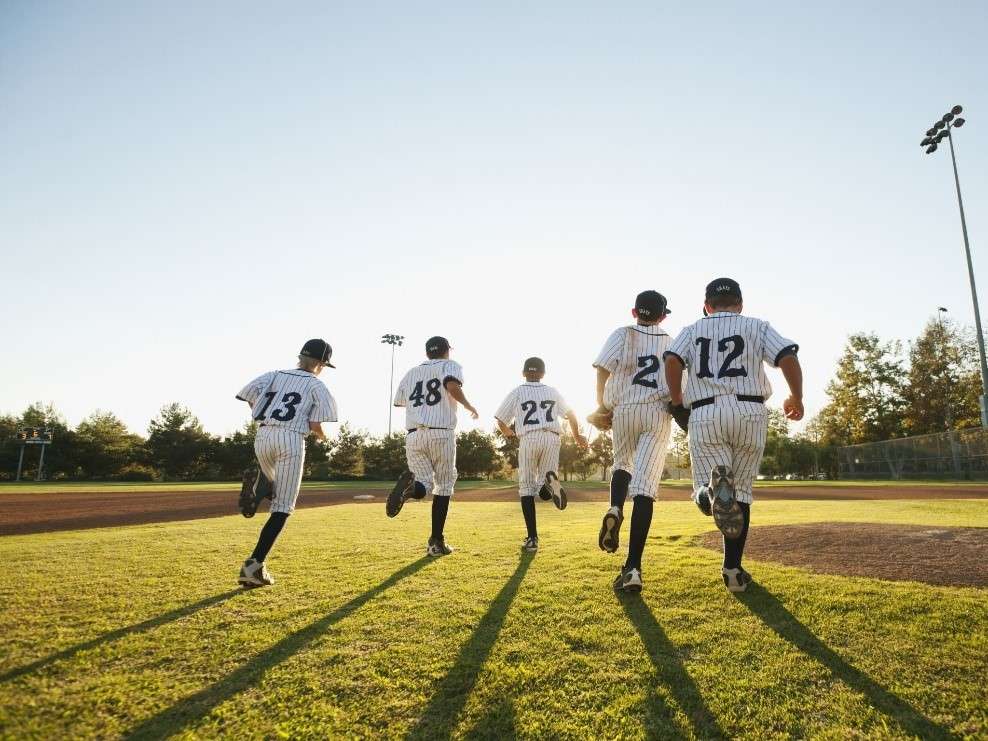
Whether you are a baseball player, dancer, or even golfer, hamstring strains can make playing impossible. Let’s take a look at hamstring strains and learn why they happen, how to prevent them, and what to do if one occurs.
The hamstring muscles are located on the back of the leg. They originate from the bottom of the pelvis at the Ischial tuberosity (the bone you sit on), run along the back of the leg and attach at the anterior portion of the knee. They not only flex (or bend) the knee, they act like the ACL (anterior cruciate ligament) and help keep the lower leg stable.
Hamstrings are made up from three different muscles, two of which connect to the inside of the leg called the Semimembranosus and Semitendinosus. The other connects to the outside of the leg called the Biceps Femoris. The most common injury to the hamstring occurs at the Biceps Femoris.

Athletes with increased risk:
- Runners, sprinters, and hurdlers
- Football, soccer, and basketball
- Dancers
- Older athletes
- Adolescent athletes
- …sounds like everyone!
There are 3 Grades of a hamstring tear:
Grade 1: Mild tear of one of more of the hamstring muscles. Symptoms can include tightness, cramping, and slight pain with stretching or activity, but usually heals well. You can walk but it feels tight.
Grade 2: Partial Tear of one of more of the hamstring muscles. You may limp and will experience pain with stretching and you may notice swelling in the area. Bruising may be present.
Grade 3: Complete tear of one of more of the hamstring muscles. This is a severe injury with detachment of the muscle belly. You may not be able to straighten your leg or even walk on it. May need surgery to reattach!
Why do you get hamstring strains?
- Muscle length: Decreased range of motion of the hamstring can cause injury.
- Muscle Imbalance: This usually involves the hamstrings, quadriceps, and the hip stabilizers (gluteus medius).
- Decreased conditioning: Most hamstring injuries occur pre-season in sports when athletes are not as well conditioned.
- Muscle fatigue: Being tired and overtrained can increase your chances of getting a hamstring strain.
- Previous hamstring strain: Once you have had a hamstring strain, you are more at risk for another.
What do you do if you have a hamstring strain?
- Grade 1 and some Grade 2’s: Think RICE!
- Rest- Take a break from your activity. The time you need will depend on the severity of the sprain and the sport you are in. Usually if it doesn’t hurt, it is OK to continue doing unless your physical therapist or doctor tell you not to. You should NOT STRETCH the hamstring right after injury. You may find that doing so prolongs the time it takes to heal.
- Ice- This can sometimes help with the pain or swelling. Do not use if you are allergic to ice.
- Compression- Wrapping an ace bandage or wearing compression shorts can help with the discomfort. Even when you are feeling better you may chose to continue with the compression shorts during your reconditioning time.
- Elevation- If you have swelling, trying to elevate the leg may help with swelling. Just make sure you aren’t in a painful position.
Grade 2 and Grade 3:
Seek medical treatment immediately if there is bruising, extreme pain, difficulty walking, and pain with extending (straightening) leg.
How do I prevent a Hamstring strain?
- Always do a proper warm-up! Frankensteins, Lunges, and Bottom-ups are great active warm-up exercises.
- Stay strong! Do you have good hip and core stability? If not you are at risk for this injury!
- Keep your muscles stretched! Having a stretching program that includes static (holding stretches for after workouts) and dynamic (stretches through movements that you do before workouts).
- Gradually increase your load of exercises. If practice is going to start in 4 weeks, don’t wait until then to get conditioned! Start now!
Hamstring strains can sideline an athlete for days up to months. Knowing when and how to manage your injury will help you recover fast!
For more information about hamstring strains:
https://kidshealth.org/en/teens/hamstring-strain.html
https://orthoinfo.aaos.org/en/diseases–conditions/hamstring-muscle-injuries