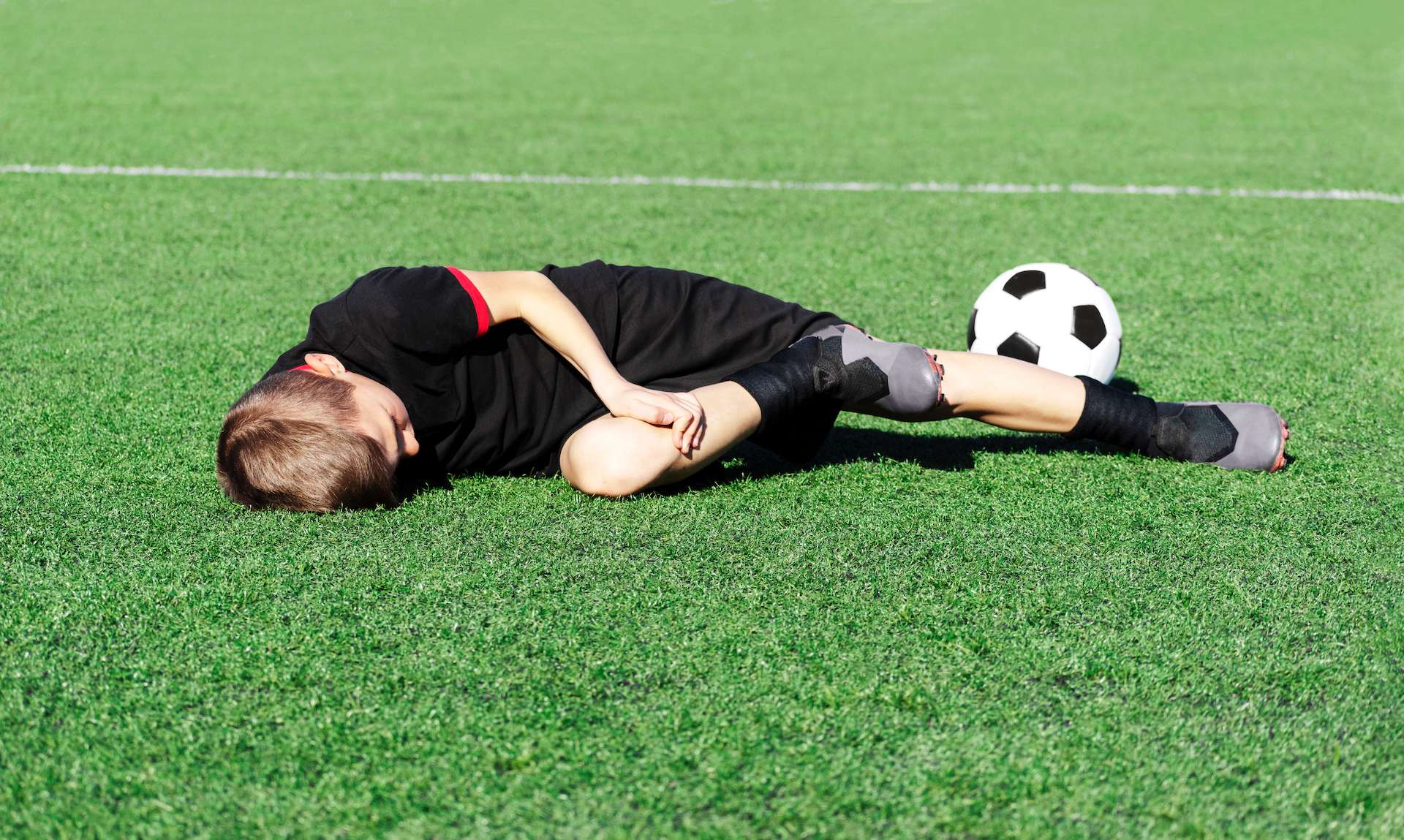
From client known as ‘BC’ who is 10-years-old and plays basketball and soccer player
The knee joint consists of three bones, the femur, the tibia, and the patella (peh-TELL-uh), which you know as the “kneecap”. The knee is a hinge joint (bends like a door opening and closing) between the femur and tibia. The patella sits above the joint held in a V shaped groove, (called the trochlea) held in place by ligaments, tendons, and muscles working together allowing us to bend, squat, and even stand up! As you bend and straighten your knee the patella glides up and down which allows us to sit, walk, and run.
How does the patella move out of place?
Trauma: Getting a hit to the knee from another person, or even hitting the ground wrong which forces your patella out of the trochlea (groove it sits in).
Twisting injuries: An example of this is when you plant your foot on the ground, but your body continues to rotate forcing your patella to leave the trochlea and subluxed or dislocate.
Congenital deformities (Stuff you are born with): The shape of your trochlea or even how wide your hips can create increased movement of the patella out of the groove.
Patella Alta: This is when the patella sits too high in the groove. This can be caused from genetics, tight muscles, or even a growth spurt that makes the quadriceps muscle pull too tight and raise the patella high in the trochlea.
Fun Fact:Allie, our billing manager, was born with Patella Alta and has received 2 surgeries and Physical therapy to correct this successfully.
How would I know that I had a patella injury? Common symptoms of a dislocated kneecap or dislocated patella include:
Feeling like the knee buckled or “gave out.”
Sudden, severe pain and swelling.
A noticeable bump on the outside of the knee (this is the kneecap that is out of place).
The knee is held in a bent position.
Bruising around the knee.
What happens if the patella moves out of place?
When the“kneecap” or patella gets out of place, it can either stay in the groove, which is called an “instability”, partially leave the groove, which called“a subluxation”, or leave the groove which is called a “dislocation”. The patella most frequently moves to the outside of the leg, but there have been rare instances where it has moved to the inside, or even slipped out of the top of the groove. Depending on how much the patella has moved away from the groove determines both the injury to the ligaments, tendons, and muscles that hold the patella in place, and the prognosis (how well it can heal on its own).
What do you do if you think that you have subluxed or dislocated your patella?
First of all, call your doctor or go to immediate care. Do not try to re-locate your patella because you can injure other structures of the knee.
The doctor may have you wear a brace to keep it in place and get the ligaments to heal.
You may have an x-ray and even an MRI to assess the damage.
What do you do if you think you have patella instability?
Find a physical therapist that understands your condition, age, and activity level to perform an evaluation to assess what is causing your knee to be unstable. They can help you understand your specific needs, work on mechanics, and get your body moving so that your patella can stay in place.
How do you prevent a patella from dislocating?
You can’tchange genetics, if you have a shallow groove, you may need to wear a brace to help hold the patella in place. You can still learn how to avoid movements that pull your knee out of place.
If genetics aren’t the factor, learning proper mechanics to decrease the lateral pull on the knee while moving is a great way to not only avoid this injury, but many others!
When do you have to get surgery?
Experts (even local orthopedic surgeons) disagree on the issue of when and whether surgery to stabilize the kneecap should be done. Conservative treatment (physical therapy) is typically used if it’s the first time you dislocate your kneecap. If it happens a second time or if it keeps happening, surgery is usually considered.
Other factors that can also play a role about whether surgery is needed include:
If cartilage or bone has been damaged.
If you were born with structures that continue to pull the patella out of place.
I hope this answered your questions BC! Keep your kneecap, and body in shape using good mechanics with your soccer and basketball and hopefully this will never happen to you!
Hello readers! My name is Madison Cockrell & I am a Doctor of Physical Therapy here at Inspire Physical Therapy and former collegiate tennis player at BIOLA University. As a 4 year collegiate athlete, I had my fair share of injuries especially with the transition from high school to college sports due to the increased […]
Hey, track athletes! It’s that exciting time of year again—track season! You’re gearing up for races, working on your sprints, and pushing yourself to achieve new personal bests. But with all the running, jumping, and fast-paced movements, a common problem tends to pop up—shin splints. Your coach might be asking, “What exactly are shin splints, […]
“What is the UCL and Why is it getting injured in pitchers?” This month’s questions from J.C about Elbow Injuries in baseball! The Ulnar Collateral Ligament, also known as the UCL, is a ligament that is located on the inside of your elbow (when your palm is up). The UCL consists of three bands of […]