
“What is tummy time?”
Tummy time is essentially, time that your baby has the opportunity to spend on their stomachs. As new parents, it’s hard to fathom laying your newborn on their bellies to perform tummy time, but it’s never too early to start. In fact, you can begin initiating tummy time as soon as you arrive home from the hospital. You can perform tummy time with baby on your chest, or over your legs, all within the first week of life. This is a perfect way to promote bonding with your newborn, performing eye to eye contact, and talking or singing to your little one. Plus, beyond bonding, it gives baby the opportunity to start building strength in their trunk, neck, shoulders and arms, a benefit we will discuss below. By 3-4 weeks old and beyond, it’s time to transition your baby down to the ground to perform tummy time.
Don’t worry, tips and tricks will be mentioned later in the post.
“So, what’s the big deal? What are the benefits of tummy time?”
Tummy time has a lot of benefits that will present both in the early days, as well as later in your baby’s life.
Tummy time is essential to the strength development of your baby’s neck, trunk, shoulders, arms and hands, all precursors to developing future milestones of movement and mobility. Babies need the strength to lift their heads off of the surface, and over time, will learn how to use the surface to move off of, pushing up onto their forearms, and then pushing with their hands. When they place weight through their forearms and eventually push up with their hands with extended elbows (arms straight), they begin to build strength in their shoulder girdle, assisting with shoulder stability, and hand strength to assist with fine motor development down the road. With the building of strength, tummy time may help prevent motor delays, and better yet, assist in your child reaching their milestones in a timely manner.
*** also see post on Developmental Milestones
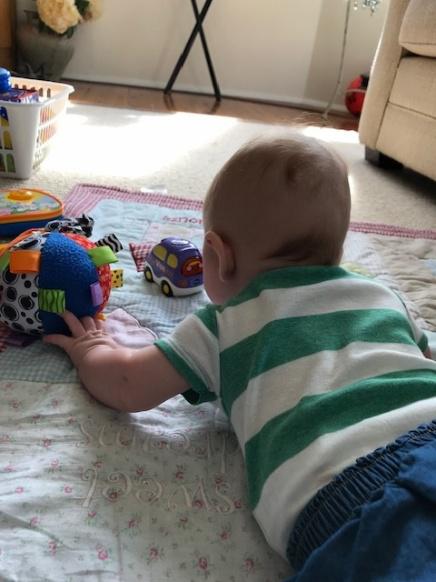
Tummy time helps prevent flattening of the head (plagiocephaly)
Since the early 1990’s the American Academy of Pediatrics (AAP) has encouraged the “Back to Sleep” campaign to help prevent Sudden Infant Death Syndrome (SIDS). Babies are spending more and more time on their back, creating increased pressure upon the base and sides of their heads. You may have noticed one side of your baby’s head appears a little flatter than the other side, depending on if baby likes to face a certain direction when sleeping or while awake. Tummy time helps to reduce the amount of time and pressure placed upon the developing shape of their heads. A good reminder is ‘back to sleep’, but ‘tummy to play’.
(Keep your eyes out for a post on Torticollis and Plagiocephaly coming soon!)
Tummy time allows your baby to explore their environment in a whole new perspective, helping to develop their visual system as well. Babies take in so much information visually and through tactile input (touch), helping gear their sensory systems for their environment and the world around them. Babies need to feel comfortable on their stomachs, especially visually, since moving forward, they will spend a lot of time in this position when beginning to crawl.
“How long should we be performing tummy time?”
I would encourage you to practice tummy time 3-4 times throughout the day, starting with very small increments of time, 2-5 minutes as a goal to start and then build upon there. Depending on the age of your baby, they may only be able to tolerate small increments of time to start, which is completely fine, but overtime, they will build better tolerance for this tough activity. I recommend that you transition them slowly to their stomachs, starting with baby on their back, and help them to roll onto their side, guiding the movement through their trunk and pelvis (hips). Allow baby to ‘play’ on their side for a minute or two, before helping to transition them onto their bellies.
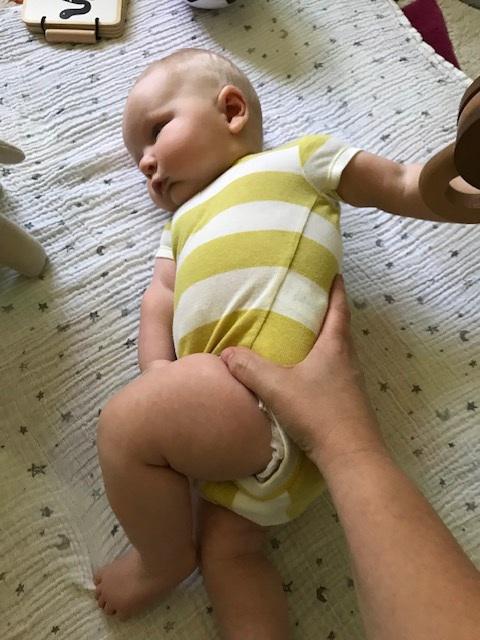
The younger your baby is, the more weight will be distributed forward up towards their heads. Babies are very ‘top-heavy’ when born, and over time, develop strength to shift their weight distribution downward toward their feet. You will notice as your baby gets older, and stronger, they will be able to lift their heads more and eventually press their chests up off of the surface, distributing more weight towards their trunk and legs.
Tips and tricks to help ease tummy time
Let’s try it:
When performing tummy time at any age, have some entertainment (yourself or your voice) or visual engagement ready for your little one. Babies can see approximately 8-10 inches from their faces, as early as birth, so when propping either yourself in front of or to the side of baby, or a simple toy or book (preferably black/white/red contrasting-colored toys or books), keep within a close distance within that 8–10-inch visual field.
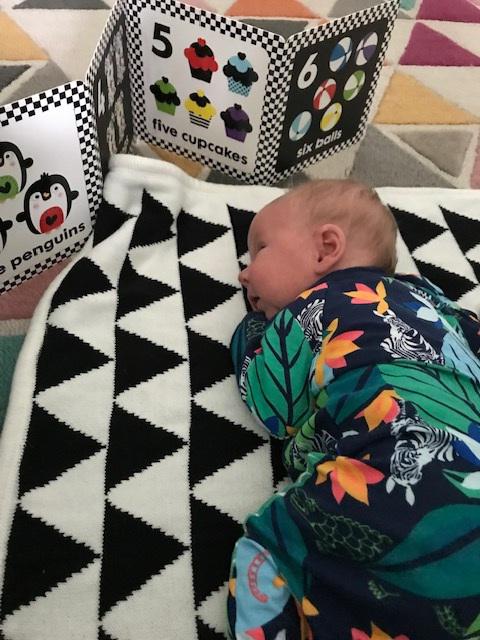
Timing of tummy time: perform tummy time approximately 30+ minutes following feeding. Any time prior to that may cause excess spit up from the pressure placed on their bellies following feedings.
In the earlier days/weeks of life: (1st month)
While performing chest to chest tummy time, make sure that the upper part of your body is angled approximately 45 degrees.
If you are laying baby over your legs, try elevating the leg that baby’s chest rests on, so that their body is angled with their hips and legs slightly lower than their chest and head, again, nearing a 45 degree angle.

As baby gets older (and parents feel more comfortable:)
Transition baby down to the ground for tummy time
You may also use a rolled up receiving blanket under their chest, near nipple level, that wraps in a “U-shape” underneath their armpits. The goal is to have their arms in contact with the surface, allowing them the opportunity to start to weight bear through their upper extremities, and get input into their hands, arms and shoulders.
The boppy pillow may also be used to assist with propping your baby on their bellies, at approximately a 30-45 degree angle. Because the boppy pillow is pretty large compared to the size of an infant, they will not be in contact with the surface, but you can help to prop their arms on the pillow so that they may press downward into their upper extremities, helping them to lift their heads off the pillow.
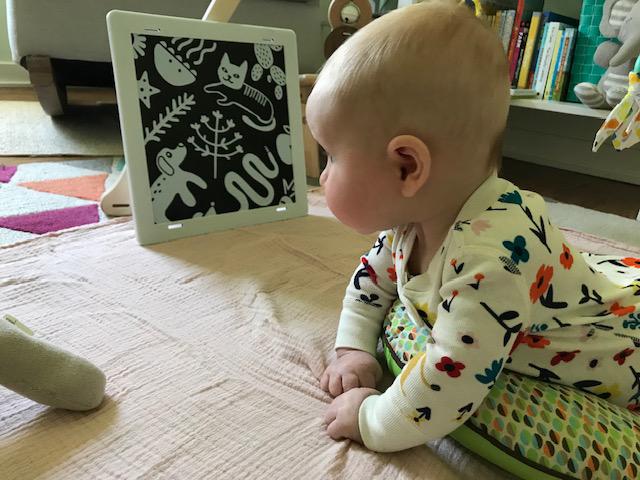
Don’t give up!
Don’t get discouraged if your baby is fussy or cries when working on tummy time. Most parents report that their babies ‘hate tummy time,’ and so little time is spent trying the position. It will get easier with practice, and as your baby builds up their strength to lift their heads and turn their heads side to side, they will also be building up their tolerance. If babies are not given the opportunity, then they will have a difficult time.
Keep at it!!