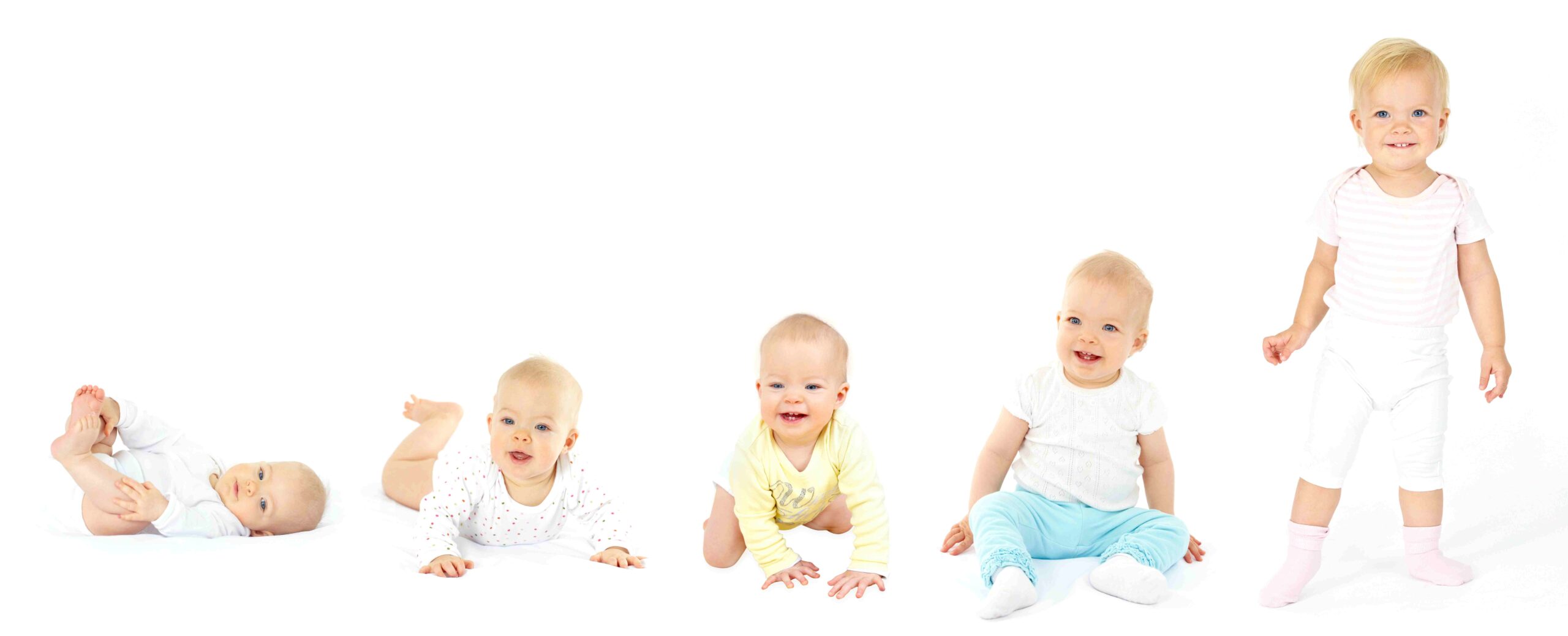
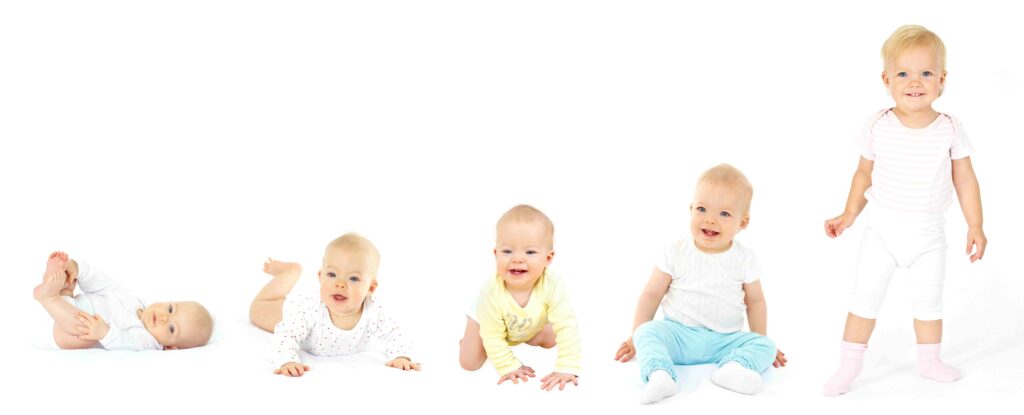
If you are new to parenthood, chances are, along with a million other things that you have googled, you have read up about developmental milestones. Or maybe you have heard your pediatrician mention them…Milestones are a general guideline or template for around the time your baby/child will be achieving different tasks. Now, I always remind parents, all babies develop at different rates, and some may even skip some milestones. There are windows for when your child may be achieving different tasks, and I usually open that window to allow approximately one month before and after the expected month of achievement. For example, usually by the age of 6 months, babies can sit independently on a solid surface. Some babies achieve this task in around 5 months, some achieve sitting independently more near 7 months of age. This is the ‘window’ of achievement mentioned above.
Milestones can be broken up into different categories, such as gross motor milestones, fine motor milestones, communication/language milestones, and sensory milestones. When babies are achieving their milestones, some kiddos may be thriving in different categories at different times. For this post, we will be reviewing gross motor milestones.
If you feel as though your child is missing some major milestones, or if you are concerned that they are falling behind, please speak with your pediatrician regarding your concerns, contact us at Inspire PT, as we have multiple pediatric physical therapists that love guiding parents in supporting their little ones, or feel free to reach out to us for any questions. Also, you can check out our weekly baby class, Milestone Movers, offered every Thursday morning, 9:15-10 am. This class is for parents and caregivers looking to give their baby the best start.
0-3 months
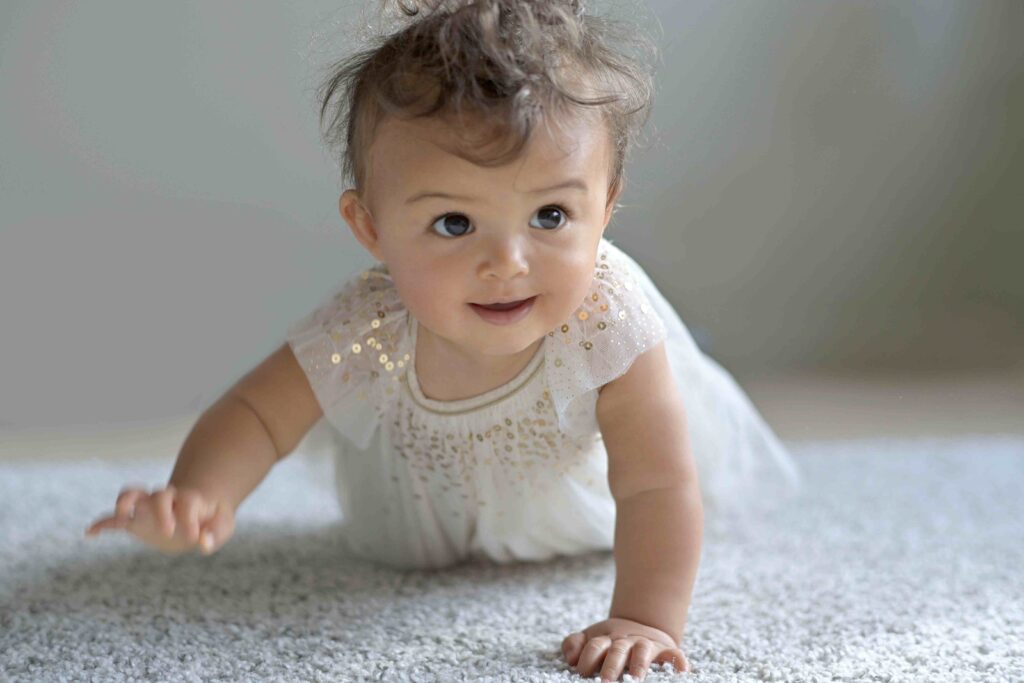
- Physiological flexion rules your baby’s resting position when in the first month of life. Notice how they love to be curled up and may appear ‘tight’ in their arms and their legs, maintaining the position that they loved so much for the last 9 months in the womb
- Tummy time is a challenge initially, but your baby will begin to push up on arms, open/close their hands on the surface, extend their necks so they are able to lift their heads more, and turn their heads from side to side
- When on their backs, they can track a toy, turning their head both directions from right to left and vice versa. The younger babies are, the more they appreciate faces as opposed to toys, and they appreciate blocks of contrasted color (like black, white, and red objects)
- They may kick their legs and swing their arms in an uncontrolled manner, lifting them off the surface when excited
- Able to bring hands to mouth which is a great skill in helping your child learn self-soothing strategies, and as they near 3 months, may bring hands together (midline)
- Babies are beginning to gain head control when they are supported through their trunks, whether in a supported sitting position on your lap, or when held in your arms
4-6 months
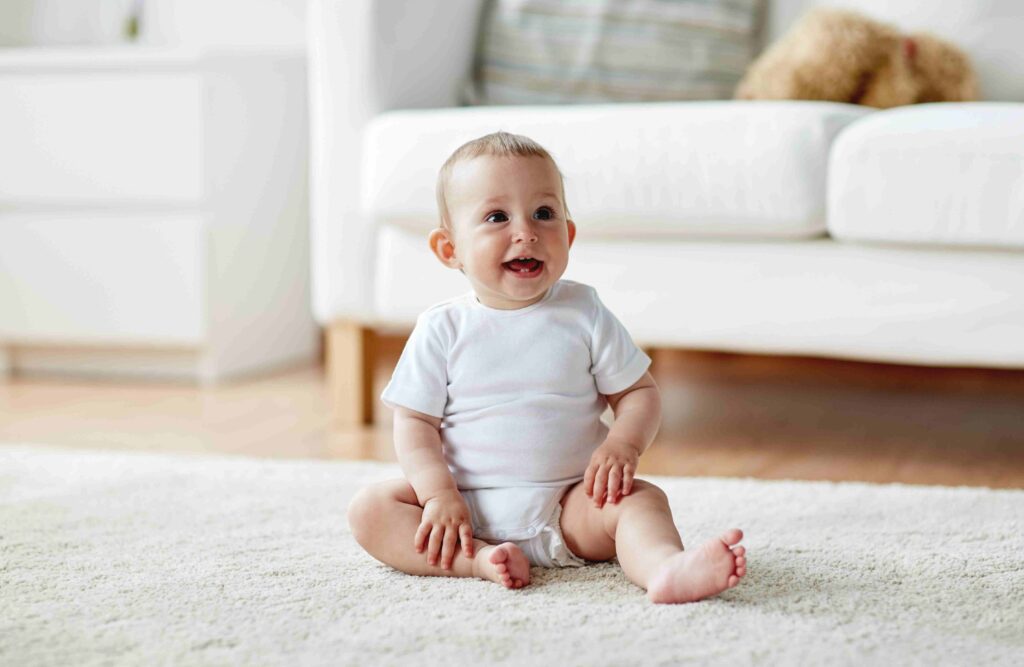
- Sitting: Your baby may begin to sit in a ‘tripod’ position, using their hands in between their legs to support themselves. Over time, they will need less support from their hands on a surface, and will begin to sit independently for just a few seconds
- Rolling: Rolls from side to side. They may start to roll from belly to back (5 months), and back to belly (6 months)
- When on belly, your baby may begin to reach for toys with their arms. They are now able to push up with elbows fully extended, arms straight
- While on their backs, your baby may begin to grab at their feet with both of their hands, engaging their abdominal muscles. They can reach for toys with one hand at a time
- Standing: will bear weight through their legs when supported through trunk or with arms
7-9 months (moving and grooving time)
- Rolling: able to roll over in both directions
- Sitting- able to sit independently without support, and can reach for toys without falling
- Your baby can track toys both right and left without losing their balance while in the sitting position
- Transitions from tummy or back to sitting positions
- Pick up their head and pushes through elbows during tummy time
- May pivot around when on their belly
- Your baby may also push up into hands and knees position (called quadruped), and rock forward and backward, side to side, working out their balance and weight shifts that will help with crawling.
- Look out, you may have a crawler on your hands. Your baby may begin to move with alternating arms and legs (creeping on belly, or crawling)
- Your baby may begin to pull up to stand on a low surface with support from their upper body
- Cruise: your little one may become even more independent and start cruising along surfaces such as the coffee table, a low bench, or the couch.
10-12 months (gaining more independence in mobility)
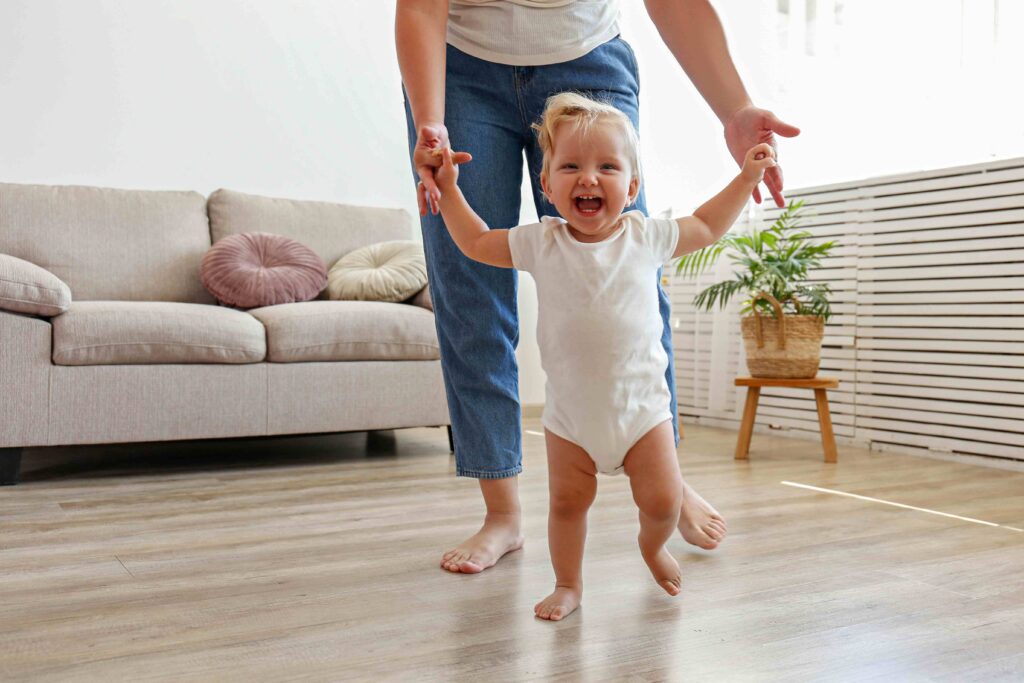
- Able to stand at a surface with one hand supported and pick a toy up by squatting down and returning to stand
- Transition in and out of hands and knees position (quadruped), to sit, and to tall kneel with better fluidity of movement
- Continue to cruise surfaces with greater ease in both directions
- Crawl up and down stairs with supervision
- Begin to stand independently, without holding onto surface
- Possibly start taking a few steps for walking, without holding on for support
- Walk independently (do not be alarmed if your child is not walking independently by their 1st birthday… it is still considered within normal rage of development for infants to achieve the milestone of walking up until approximately 18 months of age.)
Now, after reading all about the fun milestones that your little one will be achieving, keep in mind that all children develop their skills at different rates, and try your best to not compare your child’s achievements and age to any other child. Trust me, I’m a twin, and it was never fun being compared to each other with timing of achievements and skills. Just like adults, each child has their own unique strengths and weaknesses. Continue to encourage and celebrate your child’s accomplishments as they come and continue to create fun and creative ways to develop their gross motor milestones.
If you have any concerns regarding your child’s development, or if you notice certain milestones are challenging or avoided, you can always reach out to us directly at Inspire Physical Therapy. We often have appointments available weekly, we accept direct access without a referral, or if you have a referral from your pediatrician, we will work closely with them to provide a team approach for your baby and your family!
Sheldrick, Christopher et al., Establishing New Norms for Developmental Milestones
Pediatrics (2019) 144 (6): e20190374.